
Get courier pickup from your home, office, shop or other accessible location and send parcels, documents, luggage and household shipments across India where serviceable. You pack and seal; we arrange the collection; the courier network moves it.
⚖️ Approximate shipment details are used for the initial quote. Actual/chargeable weight and dimensions are verified at the courier hub after pickup — the applicable charge is explained after verification and before dispatch, where applicable.
Indicative quote first — hub verification after pickup.
In simple words: instead of you carrying your parcel to a courier office, the courier comes to you. That one shift saves a trip, a queue and the risk of carrying a heavy or fragile box through traffic.
In India, most courier counters sit inside markets or commercial lanes. Reaching them means parking a two-wheeler in a crowded lane, waiting your turn, and carrying your shipment both ways if something is missing — a copy of the address label, a signature, a box that turns out too small. Doorstep courier service removes that entire trip. You prepare the shipment at your own table, in your own time, and the collection happens at your home, office, shop or any other accessible location you specify.
The practical flow is short. You share your pickup address, destination city and PIN code, and an approximate weight and description of the shipment. You receive an indicative quote and booking information. A pickup is arranged subject to serviceability, the shipment is collected from your address, and it then travels through the courier network like any other consignment. The one thing that does not change in doorstep service is honesty about weight: the doorstep is for collection, not for measurement. Actual and volumetric weight are verified at the courier hub after pickup, exactly as they would be for a counter booking.
Doorstep service is especially useful for bulky or multiple pieces, for people who cannot leave home easily, and for businesses that dispatch regularly. It is a convenience layer on top of the courier network — the network's routes, timelines and serviceability rules still apply, and this page explains each of them without dressing them up.
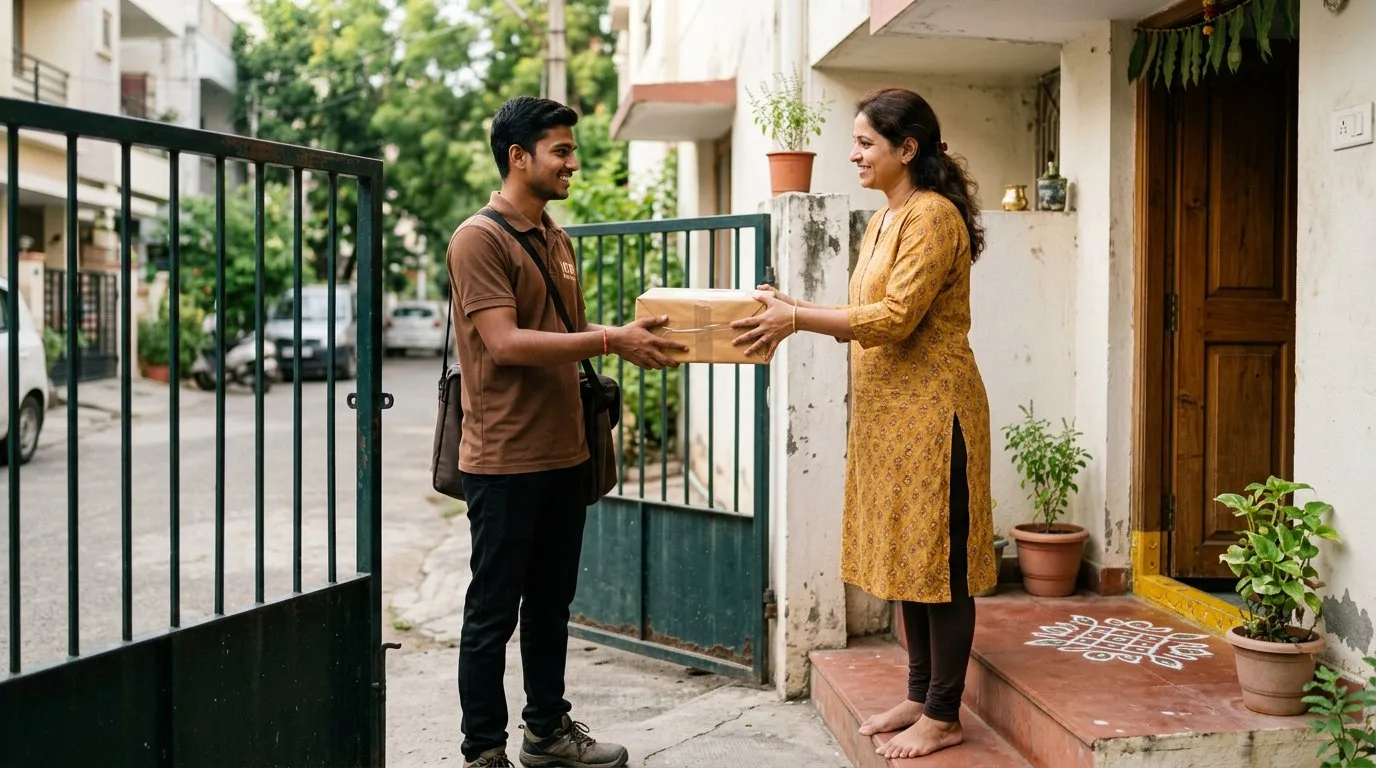
Home pickup is the most common doorstep booking in India — and the one with the simplest rules. Here is the honest sequence from your side and ours.
Packing is the customer's responsibility. A strong carton, cushioning for fragile items and complete sealing on all openings — ready before the pickup call.
Pickup address with landmark, destination city and PIN code, plus a working contact number for both ends.
A rough weight and item description are enough for the initial quote. Precision is not expected at home — that comes later at the hub.
Your locality and the destination PIN are checked. Where both ends are serviceable, a pickup window is confirmed on call or WhatsApp.
A joint piece-count happens at the door. No weighing at the doorstep — the executive collects and moves the shipment toward the hub.
Actual and volumetric weight are measured at the courier hub after pickup. The applicable charge may vary with verified details and is explained before dispatch, where applicable.
Once dispatched, the consignment travels through the courier network; tracking is shared where supported by the selected service.
Doorstep pickup is not limited to houses. These are the location types where collection is regularly arranged — each one subject to access and serviceability, never promised universally.
Flats, independent houses, colony homes — the standard doorstep pickup. Mention gate or floor access notes while booking.
Reception or desk-level collection for documents, samples and business parcels. Recurring office dispatches can be discussed.
Counter-side collection for traders and retailers. Where market lanes restrict vehicles, restricted vehicle hours should be mentioned before pickup.
Workshops, clinics, studios, godowns and small units where cartons and commercial shipments leave regularly.
Student hostels and PGs where visitors or handovers at the gate are allowed. Warden or reception rules, if any, are mentioned at booking.
Farms, sites, function venues or relatives' homes — any address a courier executive can reasonably reach, checked case by case.

Doorstep pickup is a collection method, not a shipment category — almost anything the courier network accepts can be collected at your door. These are the categories customers send most, each with its own detailed page on this site.
Certificates, contracts, invoices, application papers — sealed envelopes and board packs that must arrive together. See document courier service.
Gifts, books, clothes, single cartons and personal parcels — the everyday doorstep pickup. See parcel courier from home.
Suitcases, trolleys and travel bags for students and travellers — a practical alternative to carrying excess baggage. See luggage courier service.
Packed cartons of clothes, bedding, kitchen items and personal belongings for partial moves. See household items courier.
Samples, stock lots, commercial parcels and regular dispatches from shops and offices. See B2B courier service.
Seller dispatches and returns collected from your packing table, where serviceable on your route. See e-commerce courier service.
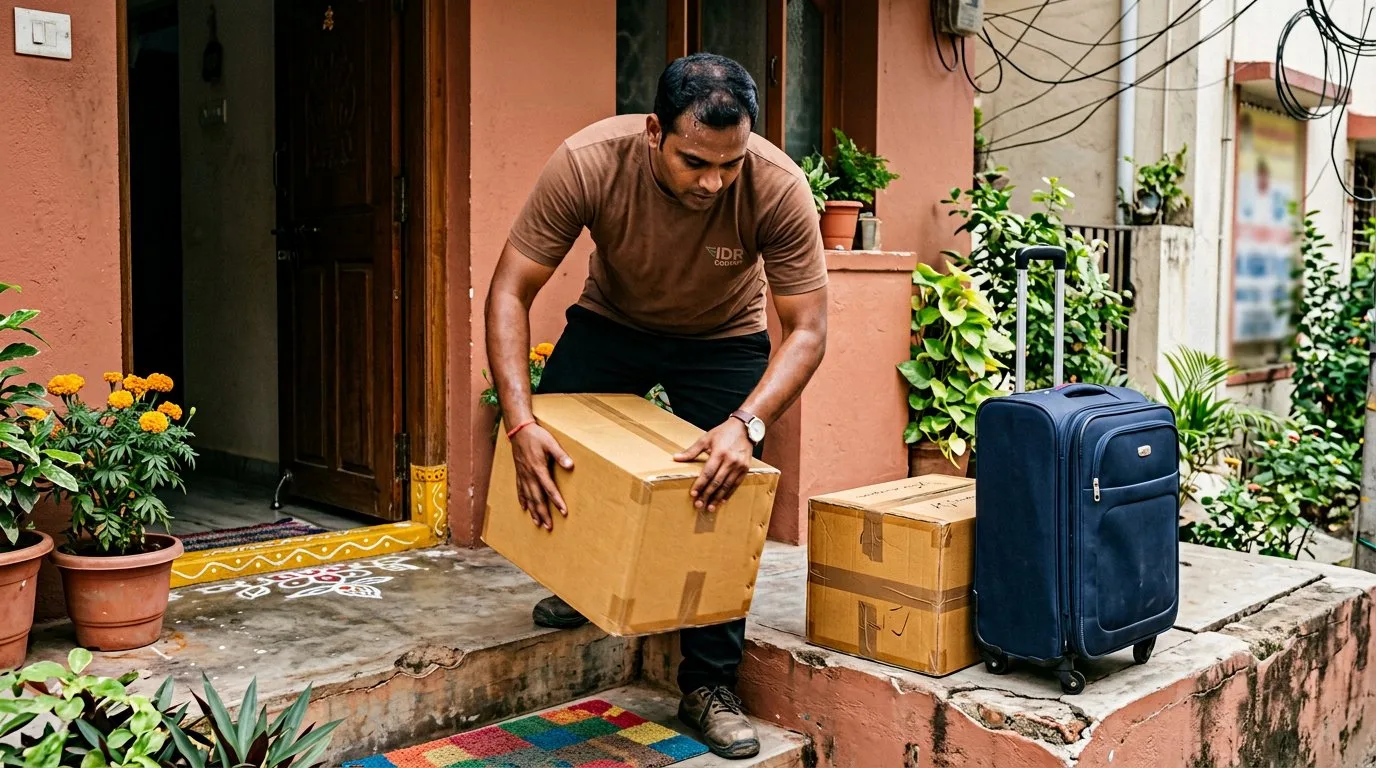
Neither mode is "better" in the abstract — they fit different situations. The difference is where the shipment enters the network, not how it travels after that.
| Factor | Doorstep pickup | Regular counter booking |
|---|---|---|
| Where the shipment enters the network | Your home, office, shop or accessible address | A courier office or counter you visit |
| Your time cost | Minutes at the door | Travel + waiting at the counter |
| Best suited for | Bulky, multiple or heavy pieces; busy schedules; limited mobility | Small urgent items when you are already near a counter |
| Weight verification | At the hub after pickup (same as counter) | At the counter or hub |
| Availability | Depends on locality and serviceability | Wherever a counter exists; some counter services are unavailable in some areas too |
| After collection | After collection, the shipment follows the applicable courier network, route and timelines of the selected service, with tracking where supported | |
Seven checkpoints from your first message to the receiver's update. No step is skipped, and none is hidden.
Address, landmark, locality, and whether it is a home, office, shop, hostel or other accessible location.
Destination city and PIN code, receiver's name and contact number.
Rough weight, number of pieces and item type — enough for an indicative quote, not a final measurement.
An indicative charge and a confirmed pickup window, subject to serviceability of both ends.
Joint piece-count at the door; the sealed, labelled shipment changes hands.
Actual and chargeable (volumetric) weight are verified at the courier hub; the applicable charge may differ from the estimate after verification.
The consignment is dispatched and moves through the courier network; tracking is provided where applicable.
The same doorstep mechanism serves very different lives. These are the customer types we see most, and what doorstep pickup changes for each.
Gifts to relatives, seasonal boxes, returns to distant family — packed at the kitchen table and collected at the gate.
Books and luggage at semester start and end, documents for admissions — collected from hostels and PGs where accessible.
Extra shopping or a heavy bag sent ahead or back home instead of carried — a practical alternative to excess baggage.
Traders dispatching samples and stock without closing the shop for a counter run.
Orders leave from the packing table, not from a market counter; returns come back to the same door.
Files, tenders, samples and equipment moving between branches without an office boy's afternoon spent in queues.
Guests' forgotten items and purchases sent onward from the reception desk, with the guest's details shared at booking.
Retail counters sending customer purchases home — furniture-sized needs go to the right service, counter items via doorstep.
For a business, doorstep pickup is not a luxury — it is the difference between staff time spent selling and staff time spent standing in a courier queue.
Recurring business pickups follow predictable patterns: documents and invoices going to clients and branches, parcels to dealers, e-commerce orders to customers, customer returns collected back, samples reaching decision-makers, and regular dispatches that repeat weekly or monthly. When these leave from your own counter or office desk, the business never actually closes for the courier run.
A realistic business arrangement starts with one honest conversation: what you dispatch, how often, in what volumes, and to which PIN codes. Depending on item, packaging, route and courier rules, a pickup pattern is suggested — and where a daily or fixed schedule is not workable for your volume, that is said plainly instead of being promised. Businesses that need structured recurring dispatches should review the B2B courier service page, which covers account-style handling of commercial consignments.
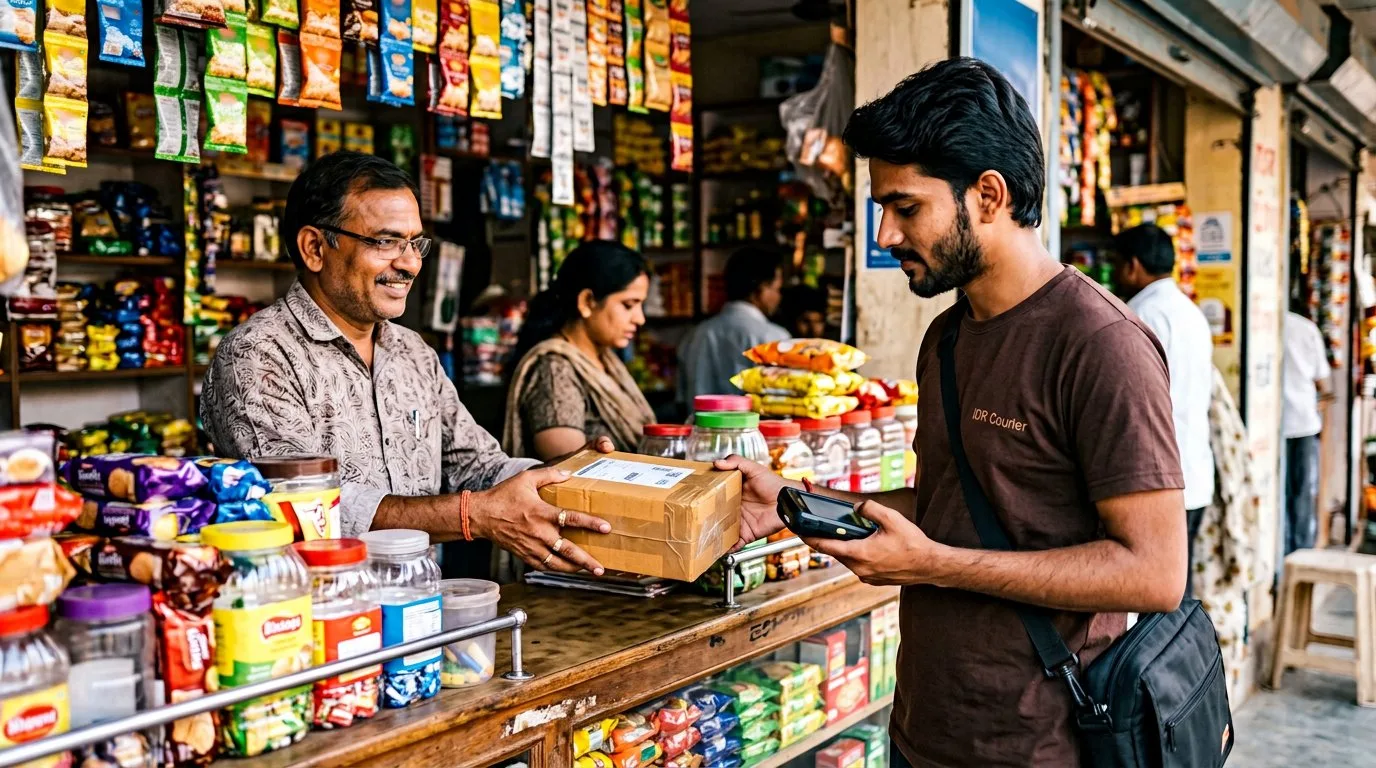
Same-day pickup is available depending on booking time, locality, route and serviceability. It is a useful capability, and it is also the most misunderstood one — so this section separates the two halves carefully.
Book early with the shipment packed and ready. Same-day pickup may be available depending on booking time, locality, route and operational capacity.
After hub verification and dispatch, delivery follows the destination lane's normal timeline — next day on aligned metros, longer elsewhere.
Collecting your box at 10 am does not deliver it 600 km away by evening. The two are separate promises, and only the first one is offered here as an option.
Doorstep pickup changes where the courier meets you; it does not change who packs. The customer packs and seals every shipment before the pickup arrives.
IDR Solutions does not provide professional packing, does not provide packing material as a packing service, and does not provide shipment insurance. That is not a footnote — it is the core rule of doorstep bookings, stated upfront so nobody is surprised at the door.
No invented exhaustive lists here — acceptance depends on the item, packaging, route and courier rules, and some categories are simply outside the courier network.
As a practical rule, cash and valuables, perishables, hazardous material, gas cylinders, leakable liquids and illegal items are not couriered. Beyond that, acceptance of borderline items — including lithium batteries and other items restricted by the selected courier network — depends on the network's current rules, which is why doubtful items should be confirmed on call before booking rather than packed in hope. If an item cannot be accepted, you are told so plainly; no doorstep pickup overrides network acceptance rules.
Most courier disputes are weight disputes. This page removes them by telling you exactly where measurement happens and what it can change.
Your rough weight and piece count produce an indicative quote. It is an estimate, clearly labelled as one.
Actual weight and dimensions are verified at the courier hub — never at your doorstep.
Courier networks charge on the higher of actual and volumetric weight; bulky light boxes can weigh more on paper than on the scale.
The applicable charge may vary based on verified weight, dimensions, destination, service type and serviceability — and is explained after verification and before dispatch, where applicable.
Once dispatched, your consignment behaves exactly like a counter booking inside the network — and that includes visibility.
Tracking is provided where applicable, using the tracking facility of the selected courier service — the track shipment page on this site accepts your consignment number. Where a particular service level offers limited scanning, that is mentioned at booking, and IDR's call support adds status updates between hubs for consignments that need a human answer. The practical habit: keep the consignment number and the booking phone number together until delivery is confirmed.
Doorstep pickup and delivery are available across India where serviceable. "Where serviceable" is not a weasel phrase — it means your pickup locality and the destination PIN are both checked before you commit, which is exactly the protection you want.
IDR Solutions runs its doorstep desk from Ujjain, Madhya Pradesh, and serves customers across its network of cities. The pages below are live service areas on this site — each with local detail — and the national doorstep desk supports consignments beyond them through available courier routes.
No superlatives and no price-boasting — just the factual reasons people book doorstep pickup instead of a counter run.
Ninety seconds with this list prevents most doorstep hiccups.
Share your pickup address, destination PIN and approximate weight — get an indicative quote, confirm serviceability, and let the courier come to you.